How do you service battery-powered products with brushless motors?
Quick cleaning and minimal routine maintenance
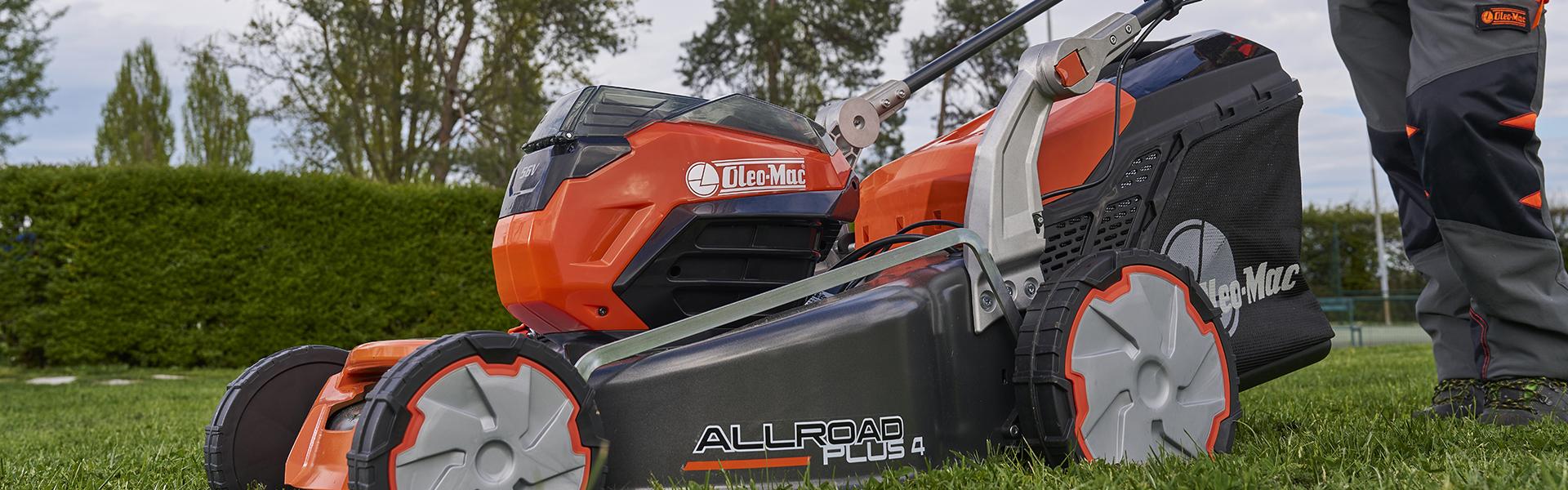
Brushless electric motors are at the heart of many devices you use every day, from drills to electric cars. They are also at the heart of our battery-powered tools, including the new 56V range, which is perfect for both landscaping professionals and discerning gardening enthusiasts. Compared to traditional brushed motors, they meet the need for greater energy efficiency, which is essential for minimizing the environmental impact of our daily actions.
Brushless technology is highly efficient, meaning that it converts almost all the electrical energy it absorbs into mechanical energy to drive the motor shaft and, in our case, to turn the blades of the lawnmower or hedgetrimmer. Brushless motors are reliable and require minimal maintenance. Today we will focus on the latter: after a brief overview of the features and advantages of brushless technology, we will summarize the key steps for proficient maintenance of the 56 V range of battery-powered tools.
Features and advantages of brushless motors
As mentioned, brushless motors have no brushes. This means that they do not have sliding electrical contacts—the brushes found in traditional motors—between the main components of the motor. The operation of a brushless motor is therefore not based on physical contact provided by the brushes, but on the interaction between magnetic fields, which is managed by an electronic board.
What are the advantages of brushless motors over traditional electric motors? Along with greater reliability provided by electronic control and reduced maintenance, gardening tools with brushless technology offer you:
- Greater responsiveness and power (torque).
- Higher performance, meaning longer working time with the battery that powers them.
- Less risk of overheating thanks to better heat dispersion.
- Greater safety (brushes cause sparks).
- Compact size and lower weight for the same power.
- Quieter operation.
Brushless motors are easier to maintain because you don’t have to replace worn brushes or other components that wear out in brushed motors due to friction with the brushes. This means that brushless motors are longer lasting.


Routine maintenance of brushless motor garden tools
Let’s start with an overview of routine maintenance for all battery-powered tools in the 56 V battery range. In the next section, we will summarize the key points of routine maintenance specific to each type of machine for each category of tools. For detailed instructions, please refer to the respective user and maintenance manuals.
For anything that does not fall within the scope of routine maintenance, we recommend that you contact our service centers, which are always at your disposal. The service centers are your point of reference not only for extraordinary maintenance, but also for general tool checks, which we recommend you have done every two years (every year if you use them intensively).
Before performing any operation, turn off the machine and remove the battery so that the engine cannot start accidentally. Be careful of moving parts (blades, brushcutter head, etc.), which must come to a complete stop, and allow the engine to cool down. If you have one of our lawnmowers, remove the safety key as well.
Wear a pair of work gloves to protect your hands and:
- Inspect the entire machine for signs of wear, breakage, leaks, etc.
- Remove all green debris.
- Clear the engine cooling air intake grilles.
- Clean the body with a dry cloth, without using water.
- Clean the handles so that they are dry and free of oil/grease to ensure perfect control of the machine at all times.
- Check that the screws and nuts are tight and, if necessary, tighten them securely.
The battery should also be checked and cleaned with a dry cloth, or one that is slightly damp at most. Finally, store the machine in a dry place away from the elements. If you are using a pruner or hedgetrimmer, fit the bar cover or blade cover.
If the machine or any of its parts—such as the blades of the lawnmower or hedgetrimmer, or the pruner bar—are damaged, we recommend that you do not use it. Contact a service center for repairs or replacements. Only replace using original Oleo-Mac spare parts.
Now let’s move on to batteries: use those recommended for your machine and recharge them only with the appropriate battery charger: using other types of batteries and chargers can be very dangerous. Work with batteries that are in good condition: in case of dents, wear, or fluid leaks, and for any maintenance needs regarding Oleo-Mac batteries, contact our service centers.
Store them between 0 and 23°C and avoid high temperatures and direct sunlight. Keep them away from metal objects to prevent short circuits. Also follow the charging instructions: place the charger in a dry place away from flammable substances, on a stable surface and so that the air vents are unobstructed. The batteries are protected by a system that stops charging if the ambient temperature falls below 0°C or exceeds 45°C.
Before starting work, check that the machine and batteries are in good condition and make sure that the controls and safety devices are working properly. Also check that moving parts (blades, brushcutter head, pruner chain, etc.) are not jammed and move smoothly. Check that the guards (e.g., on the brushcutter or mower) are securely fastened and undamaged.
If you feel that you have hit something while working, stop and check for damage. We have fitted the machines in the 56 V battery range with a digital display: keep an eye on the alarm and service lights. The alarm light (blue or red triangle with an exclamation mark) indicates that the battery or machine is overheating: simply switch it off and let it rest for a few minutes. The service light (spanner) indicates a problem that requires you to stop working and contact an Oleo-Mac service center.


Routine maintenance of individual battery-powered tools
Let’s now focus on the main steps involved in routine maintenance for the categories of tools in our 56 V battery-powered range. In the overview we gave earlier, we excluded specific information about the distinctive features of individual tools: we will summarize these below.
If you use a brushcutter with a cord, check that the head is intact, otherwise replace it. Replace worn-out wire with the recommended type and diameter to avoid overloading the motor. The same applies to blades designed for thicker vegetation: only fit the models recommended by the manufacturer for your brushcutter.
If you have a multifunction brushcutter, only use original Oleo-Mac attachments to convert it into a pruner, hedgetrimmer, or blower. Before starting work, make sure that the attachment is securely fastened. When you have finished working, make sure that both the engine unit and the attachment you used are undamaged. Periodically check the lubrication of the drive shaft on both the engine unit side and the application side: when necessary, add the appropriate molybdenum disulfide grease.
The bar/chain assembly of the pruner must always be in perfect condition. Maintaining it ensures good quality cuts, safety, efficient work, and longevity of the cutting elements:
- Keep the chain sharp according to the instructions in the user manual and adjust its tension.
- Make sure the bar is in good condition: clean the guide in which the chain runs, turn the bar so that it wears evenly, and file off any burrs that form.
- Check that there is always oil in the tank to lubricate the bar and chain, and clean the internal filter.
- When necessary, replace the bar and/or chain only with original spare parts, in accordance with the manufacturer’s specifications.
As for the hedgetrimmer, the blades must not be damaged or worn: if they are, replace them with original spare parts. Keep them clean so that they do not lose their edge, file them according to the instructions in the user manual, and lubricate them. From time to time, remove the screw and nut that join the blades and carefully clean the joint area. If you have a pole hedgetrimmer, check the grease level in the gearboxes.
Maintenance of the blower is very simple and consists of dismantling and cleaning the air jet pipe once the job is finished.
Let’s close with specific maintenance for lawnmowers:
- Clean the underbody and grass discharge holes without using water jets.
- Check the grass catcher for wear and tear. If the fabric is clogged with grass, wash the bag with water and let it dry completely, then reattach it so that it is securely fastened to the mower.
- Make sure that the rear and side deflectors and the mulching plug are also intact.
- Check the tightness of the bolt that secures the blade to the hub.
- Keep the blade sharp: this is a very delicate operation that requires balancing and reassembly in the correct direction, which must be carried out by technicians at our service centers.
- If the blade is bent or damaged in any way, do not attempt to repair it yourself: it must be replaced with an original spare part. We recommend that you contact an Oleo-Mac service center in this case as well.
Below is an overview of our new 56 V battery-powered range and a feature on it, with a summary of its strengths, a description of each of the tools, and a summary of battery life.
Related articles

Dry farming: how to grow produce without water


How to grow an evergreen hedge