Summer pruning of vines: thinning, leaf removal, and tying
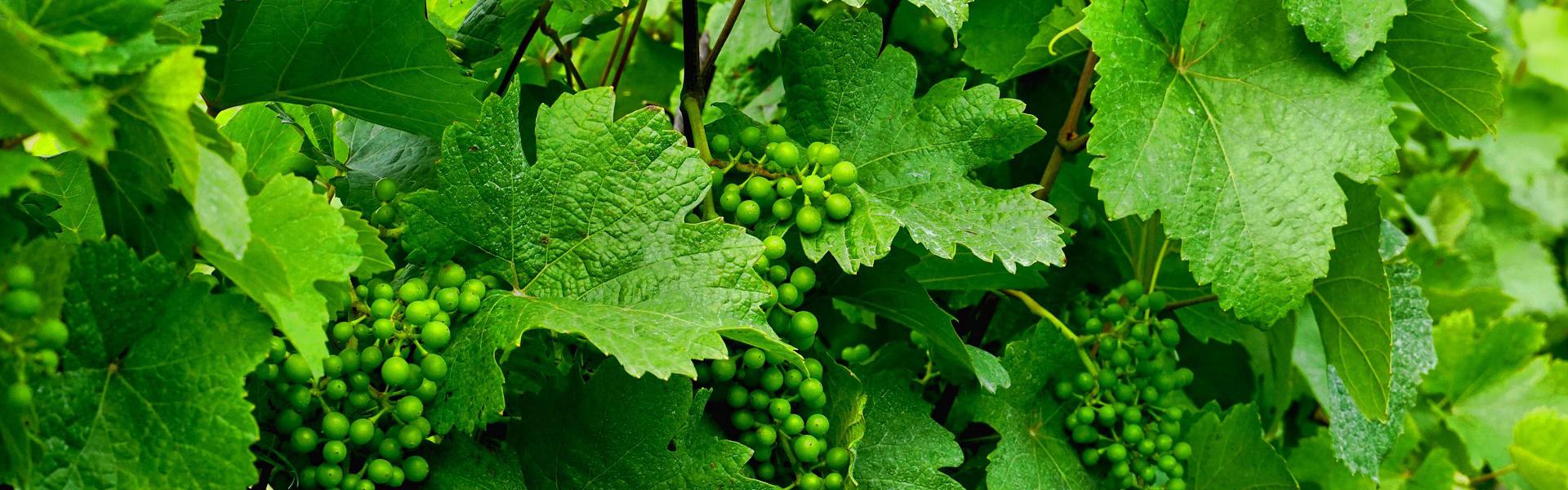
Among the tasks to be carried out in the vineyard, winter or dry pruning—which is done during the dormant season, either in late winter or as early as late fall, depending on the region—is probably the best known, but it is not the only one. In fact, there is such a thing as summer pruning, or green pruning, which is not a single operation but a series of tasks to be performed on the green parts of the plant between late spring and summer. The goal of summer pruning is to prevent shade and humidity around the grape clusters and ensure that the grapes are of good quality.
Although less well-known, summer pruning of grapevines is no less important than winter pruning, both in terms of its function and the effort it requires. As we mentioned, it involves several practices: suckering, thinning, lateral shoot removal, topping, tying shoots; leaf removal; and thinning the grape clusters. Not all of these are necessarily performed; each case must be evaluated individually, for example, based on the vineyard’s training system or the weather conditions of the growing season. Today we’ll discuss the various summer pruning tasks, focusing in particular on thinning, tying shoots, and leaf removal.
Why do we prune vines in the summer?
With dry pruning, you leave a certain number of buds on the vine that formed the previous spring (dormant or overwintering buds). Once winter is over, as these buds begin to grow, they develop into shoots (with their leaves), which will lignify over the summer to become canes, and into inflorescences—that is, clusters of small flowers that will form the grape clusters.
An excessive number of shoots is detrimental to proper grape ripening and the health of the vines. Green pruning helps you balance foliage and grape clusters by selecting the most promising shoots for production and creating optimal conditions—a well-ventilated canopy that receives plenty of sunlight—so that the grapes can ripen to their full potential. This also prevents conditions favorable to the onset of diseases—including downy mildew, powdery mildew, and botrytis—and allows you to better distribute the necessary treatments.


Thinning, leaf removal, and tying the vines
By thinning the shoots, you remove the double shoots—the extra shoots that sometimes grow from the same bud alongside the main shoot. In general, thinning removes sterile shoots—that is, those without clusters. More broadly, you remove excess shoots, even if they are fertile (i.e., bearing clusters). In fact, it may be advisable to remove those that, due to poor positioning or weakness, make the canopy too dense.
Thinning should be done directly by hand, without pulling off other shoots or canes, while the shoots are still tender (about 20 cm long), or using pruning shears. It is important not to be too drastic, so that the vine does not react by stimulating the growth of the remaining shoots—which you will then have to correct with topping (which we will discuss later)—and so as to avoid problems during winter pruning. By also removing fertile shoots, thinning allows you to at least partially “preempt” the thinning of the clusters (we’ll discuss this later as well).
Leaf removal or defoliation is a green pruning technique used to remove some of the basal leaves—the oldest ones that are least useful for photosynthesis and, therefore, for grape ripening. You can do this from pre-flowering to veraison (the change in color from green to the typical color of the grape variety). It is best to do this around the time of fruit set (the transition from flowers to berries) or, at the very latest, during the pre-closing phase of the clusters—that is, before the berries begin to touch one another as they grow larger.
The purpose of leaf removal is to ensure that the clusters are well-ventilated and exposed to any necessary treatments, making them healthier, and better illuminated by the sun, resulting in fully ripe, high-quality fruit. If you have a family vineyard, you can remove the leaves by hand. Defoliation is not always necessary; it becomes necessary if the leaves are too dense around the grape clusters. In fact, one possible negative consequence of excessive defoliation or defoliation during the sunniest period is sunburn on the grapes. However, it can be helpful to defoliate shortly before harvest to facilitate manual picking.
Thinning, along with suckering and lateral shoot removal—which we will discuss shortly—should be done before tying the shoots or trellising. As the shoots grow, they are not always able to cling to the support wires on their own, so they hang down along the row, risking breakage and creating an obstruction. By tying the vines, you secure the shoots to the horizontal wires, guiding their growth according to the training system, and preventing them from shading the grape clusters or covering areas that may require pesticide treatments.
Tying is essential in espalier training systems where the shoots grow upward, such as the Guyot and spurred cordon systems. To tie them to the wires, you can use natural materials—such as traditional willow twigs or raffia—or special steel or plastic clips. As an alternative to tying, the shoots are “secured” between pairs of movable wires which, when the shoots begin to bend, are lifted along with the foliage and secured with special hooks.
For green pruning tasks that you can perform with just your hands, without using shears, we recommend wearing sturdy work gloves. When using pruning shears, wear cut-resistant gloves at least on the hand not holding the shears; you can also wear cut-resistant sleeves to protect your forearm. Protect your eyes with goggles or a face shield and your feet with cut-resistant footwear.


Other summer pruning tasks for vines
Thinning, mentioned earlier, completes the first stage of green pruning, along with suckering, which can be performed at the same time. When suckering, you eliminate the shoots that grow along the vine’s trunk, known as suckers. These must be removed to prevent them from competing with the fruit-bearing shoots for nutrients: you can do this by hand while they are still young, or with pruning shears. Taking care not to damage the trunk, you can also remove suckers using a brushcutter equipped with a string trimmer head.
If your vineyard has a cover crop, you can also use a brushcutter to periodically mow both the rows and the areas between the rows. In the midrows, you can also cut the grass with a side-discharge garden tractor or an all-purpose garden tractor, or mulch it with a flail mower. Here you can learn more about soil management with cover cropping and clearing the under-rows with a brushcutter in the vineyard.
Lateral shoot removal, on the other hand, is a type of green pruning used to remove lateral shoots or early-growing shoots that originate from buds that formed in the same year (known as “prompt buds”). Lateral shoots are useful to the vine for photosynthesis, so you can simply remove by hand or with pruning shears those that cause crowding in the canopy, taking care not to damage the nearby dormant bud.
After tying the vines, use topping to remove the tips of the shoots—along with the youngest leaves—to manage the foliage when it starts to grow past the wires and ensure that the vine focuses its resources on the grape clusters. In a small vineyard, you can do this by hand or with pruning shears. Topping should not be drastic to avoid removing many of the leaves most active in photosynthesis (and ripening). On the other hand, it can promote the growth of lateral shoots, which compensate for the removal of the most functional leaves.
Although it is the classic practice we associate with pruning, pruning does not simply mean cutting branches or shoots—that is, future branches—as we have already seen with leaf removal and tying. Thinning the clusters involves a selection process, in which, between fruit set and veraison, you remove—by hand, using pruning shears—the excess clusters. Thinning reduces competition among the grape clusters by removing those growing on weak shoots, those that are late to ripen, or those that are poorly positioned, etc. Thinning is not always necessary; it is generally practiced for high-quality grapes. It can be useful in vintages where there are a large number of clusters, a situation that compromises grape quality. However, this is an extraordinary measure that cannot correct a vegetative-productive imbalance, which must be managed differently, starting with winter pruning.
We conclude this article with an overview of how to choose a grape variety for planting a vineyard, and a focus on the plants you can pair with grapevines to make the most of biodiversity in the vineyard.
Related articles

Which tools are essential for the vegetable patch?
Three reasons why a brushcutter beats a lawn edger