The different dimensions of soil fertility and what it means to fertilize
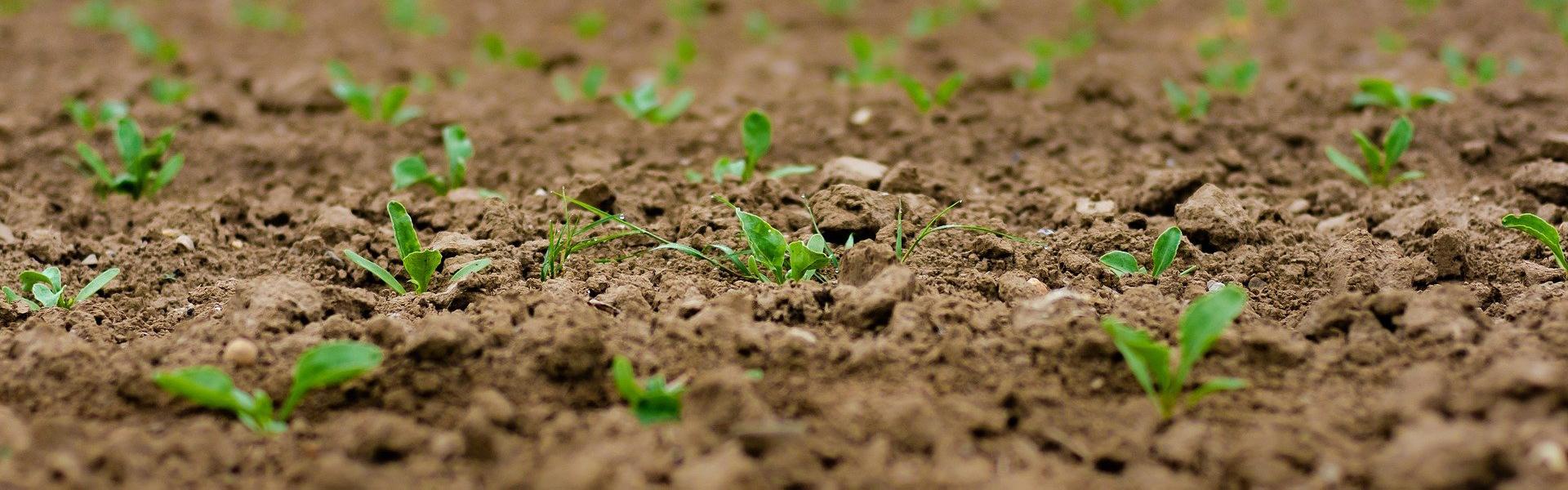
Soil is the uppermost layer of the Earth: although it is often several meters thick, you can think of it as the planet’s “skin”. It originates from the degradation of the Earth’s crust: one centimeter of soil takes 100-1,000 years to form, so it is a non-renewable and limited resource.
Soil is composed of 50% solid matter, with the rest being water and air (25% each). The solid part is made up of 45% minerals (clay, sand, etc.) and 5% organic matter. We will return to the composition of soil later in the article, which explains what fertile soil is like and what to do to keep it that way.
When is soil fertile?
What do we mean by soil fertility? It is not the sum of the nutrients it contains, nor is it synonymous with high productivity. It can be defined in various ways, from a number of perspectives, for example as the ability to meet the nutritional needs of plants or, in a broader sense, to support their growth.
Soil has physical, chemical, and biological properties that interact and contribute to its overall fertility. In fact, we talk about physical, chemical, and biological fertility: let’s start with physical fertility, which is determined by good structure.
Physical fertility: texture, structure, stability
The structure of the soil consists of the way its particles are aggregated, and depends on another physical property, which is texture. The latter derives from the type of particles that make up the mineral part: from fine to coarse, these are clay, silt, and sand. Depending on their percentage, soils can be broadly classified as clayey, silty, sandy, and medium-textured (or loamy). To understand what the soil is like in the countryside or in your garden, you can request a soil analysis from a laboratory, or you can make an empirical self-assessment by wetting a handful of soil and examining it by touch.
The structure determines other properties of the soil that are very important for you as a grower: porosity, permeability (to rain and irrigation water), water retention (ability to retain water), aeration, and workability, i.e., ease of tillage. In particular, porosity is the volume not occupied by soil particles and provides roots and soil organisms with what they need to live: space, water, and oxygen.
A good structure is stable: the stability of aggregates depends not only on the elementary particles of the soil but also on organic matter, minerals, and living organisms (such as fungi and earthworms), which act as a “binder”.
Chemical fertility: nutrients, pH, and other properties
The chemical fertility of the soil is determined by a good concentration of nutrients for plants and their availability. In fact, nutrients alone are not enough: water is also needed, present in the pores in the form of a circulating solution (which is water with dissolved mineral salts). In order for plant roots to absorb nutrients in the best possible way, the circulating solution must have a suitable pH, which varies from plant to plant.
To measure the pH of the soil in the countryside and in the garden, all you need is a portable pH meter or litmus paper. Along with pH, another chemical property of the soil that is essential for the absorption of nutrients by plants is its ion exchange capacity, in which both clay and organic matter play a central role, as we will discuss shortly.


Biological fertility: living soil rich in organic matter
The biological fertility of the soil coincides with its vitality and biodiversity, i.e., the fact that it hosts a large, diverse, and active population of micro- and macro-organisms. What are these? In the soil, you will find bacteria, fungi such as yeasts and molds, algae, protozoa, insects, arachnids, worms including nematodes and earthworms, macrofauna, etc.
How do they contribute to fertility? In several ways, for example, they dig into the soil, loosening it and increasing its porosity. They transform plant and animal remains into nutrients that can be assimilated by plants and into stable organic matter, i.e., humus, through the processes of mineralization (rapid decomposition) and humification (slow decomposition), respectively.
Biological fertility is not only related to the organisms that inhabit the soil, but also to the organic matter present, which is the main source of food for soil organisms. Together with living biomass—micro and macro soil organisms—organic matter forms the organic part of the soil, as opposed to the mineral part.
In the soil, organic matter is the combination of plant, animal, and microorganism remains at various stages of decomposition and substances synthesized by living organisms. Humus is also part of organic matter, which is its stable, i.e., well-decomposed fraction. Organic matter is essential for the physical, chemical, and biological properties of the soil, i.e., for its fertility. It is, in fact, a source and reserve of nutrients for crops and, as we have said, food for organisms. It also affects the availability of nutrients (in a form that can be absorbed by plants), soil structure and stability, water retention, workability, etc. Clay soils tend to be rich in organic matter, while sandy soils are poorer.
Fertilizing the soil is not just about spreading fertilizer
How can you maintain soil fertility or even improve it? By fertilizing, i.e., adding specific substances: from a technical point of view, fertilizing the soil involves three distinct activities, namely fertilizing, amending, and correcting.
Fertilizing the soil means modifying its chemical properties with nutrients that can be directly used by plants, including macroelements (nitrogen, phosphorus, potassium, and so on) and microelements. Fertilizers can be synthetic or natural minerals, or organic materials of animal/plant origin. As for organic materials, you can produce them yourself or manage them yourself (as in the case of manure, compost, or green manure crops) or purchase them (for example, in the form of pelletized manure).
Amending the soil means altering its physical properties, for example by adding organic matter—such as manure and compost—which improves its structure. Manure and compost not only amend the soil but also fertilize it (they are slow-release fertilizers). In the countryside and in the vegetable patch, you can also provide organic matter to the soil with total or partial green manure, burying ad hoc crops or crop residues on site (we will discuss this later).
If you have sandy soil, you can improve its structure with organic matter in the form of manure, compost, green manure, or other substances. If, on the other hand, it is very compact, i.e., clayey, manure and compost are also suitable for “lightening” it. Alternatively, you can achieve the same effect by adding sand: a viable solution for small areas.
Correcting the soil consists of modifying its pH with acidic or basic substances. Acidic soil—with a pH of 5.5 or lower—may, for example, lack biological fertility. To correct this, you can use quicklime or slaked lime, or irrigate with hard water (rich in calcium carbonate). If you have basic or alkaline soil—with a pH of 8 or above—you can acidify it with gypsum, i.e. calcium sulfate; if it is calcareous, you can use sulfur-based products, manure, or (for small areas) peat.


How to maintain fertile soil
In practical terms, how can you maintain and improve, in short, promote the fertility of your soil?
-
Manage organic matter correctly.
-
Practice green manuring.
-
Vary land use with crop rotation.
-
Prefer minimal tillage.
-
Be careful not to compact the soil.
If organic matter is a cornerstone of fertile soil, managing it becomes crucial. Between organic matter and its most stable fraction—humus—there is a dynamic process involving inputs, absorption by plants, losses, and accumulation in the soil. Organic matter must be replenished because it is gradually “consumed” by crops that absorb nutrients from the soil, which is also depleted by other mechanisms such as leaching (the transport of nutrients into the deeper layers of the soil by water). By burying organic fertilizers, such as mature manure or compost, you gradually increase the amount of organic matter and humus present, or at least do not decrease it, promoting physical, chemical, and biological fertility.
As mentioned above, green manure consists of burying fresh crops on site after shredding them, which are sown and grown specifically for this purpose (usually legumes, cruciferous vegetables, or grasses). What are the benefits of green manure? It adds organic matter, provides nitrogen and other minerals, and protects the soil from water and wind erosion. There’s more: it loosens the soil, prevents pests and diseases, and eliminates weeds.
You can also make green manure by burying crop residues: in this case, we refer to partial green manure. Of course, removing plant residues takes organic matter away from the soil. This applies not only to the countryside and vegetable patch, but also to gardens: the mown grass that you leave on the lawn to decompose with mulching—thanks to a mower or riding mower—is a valuable resource. You can achieve a similar result with a robot mower, which cuts little and often.
Green manure is effectively a “living cover” for the soil. Grassing has a similar function to green manure—providing organic matter if you leave the clippings in place, combating erosion, etc. It is a soil management method typically used in vineyards and orchards, but the benefits of grass cover also extend to your garden lawn, whose value is therefore not only cosmetic. Here you can learn more about inter-row grass covers.
Although it is not a living cover, mulching—made with natural materials such as compost, straw, leaves, or dry grass—gives you similar results to green manure, from weed control to erosion protection, from anti-compaction to organic matter enrichment. On this topic, here is our article on how to mulch.
Since time immemorial, crop rotation has been a cornerstone of preserving soil fertility in field and vegetable patch cultivation: it serves both to provide organic matter, and to control the development of pests, diseases, and weeds. You can put it into practice by alternating crops with different characteristics, based on criteria such as nutrient consumption or root depth. In vegetable patches, you can adopt green manure during the fall/winter season, when you grow fewer vegetables, or during periods when you leave the soil to rest.
Respectful cultivation also means minimizing tillage, i.e., working the soil as little as possible, at a shallow depth, and in a non-aggressive manner. In this way, you conserve organic matter, preserve soil structure, and do not disturb living organisms. On the one hand, tillage serves to improve the structure and, consequently, the physical, chemical, and biological properties related to it. It also serves to incorporate fertilizers, eliminate weeds, and prepare the seedbed/transplant bed. On the other hand, it facilitates the rapid decomposition of organic matter to the detriment of humus formation and makes soil aggregates less stable.
Compaction causes the soil to lose its structure. As a result, the soil absorbs less water and becomes inhospitable to plants and soil organisms, which are left without oxygen and space. Compaction is not just superficial: plowing and tilling can actually crush the soil deep down—this is known as plow pan/tillage pan—causing waterlogging in particular. Clayey soil, as well as damp or wet soil, is more prone to compaction. So, to minimize compaction:
-
Wait until the soil is dry before carrying out any activities (tilling, harvesting, etc.).
-
Limit trampling and the passage of equipment.
-
Choose tracked machines over wheeled ones, for example when using a flail mower or transporter.
-
If the size of the area allows it, alternate machine work with manual work, for example, alternating the use of a rotary tillers or two-wheeled tractors with a spade or hoe.
On soil cultivation, here you will find our article on how to till and a feature on tilling hard soil (i.e., clayey soil). Tilling is also useful for avoiding water waste: we have written about this in relation to dry farming.
Related articles

Garden: all the jobs for October

Flail mowers: When to Use Them for Mowing Grass
