How to prune a fig tree: when to do it and how to manage the cuts

The fig tree probably originated in what is now Turkey, from where it spread throughout the Mediterranean basin, where it has been present since time immemorial. The domestic fig (Ficus carica sativa) is one of the oldest cultivated plants in the area, with a vast number of ancient and local varieties.
It is highly productive and long-lived (it can live for over 60 years). Today in Italy, it is widespread in the countryside as individual trees grown for personal consumption, but less so, even compared to the past, as a commercial crop. In the latter case, the term fig cultivation is used, and fig groves are mainly found in Calabria, Campania and Puglia.
It is a hardy species requiring little care, so much so that it often occupies marginal areas – with nutritionally poor soil – and grows wild in challenging locations. It adapts to any type of soil provided it is not subject to waterlogging, which causes root rot, to which it is susceptible. It thrives in heat and sunshine, whilst temperatures below 8°C can cause damage. It is drought-tolerant, but the fruit may suffer if the drought goes on for too long. Pruning is one of the few maintenance tasks required for this fruit tree: today we will be discussing the pruning of the fig tree.
Getting to know the fig tree
Unless it forms part of a fig grove, the fig tree generally grows freely, without its development being guided by a specific training system. It therefore has a shrub-like habit, with a short trunk and branches arising from the base. It tends to grow upwards and outwards, forming a wide and rather “dishevelled” crown. It does not produce many branches, which are in any case rather weak.
Figs are delicate and perishable, and very sweet. A symbol of abundance and fertility, they can be more or less round in shape, with a yellow, green, purple or brown skin. In reality, they are not fruits: botanically speaking, they are false fruits; in fact, they are flowers, or rather, fleshy inflorescences. The actual fruits are the achenes, or the “seeds” you find in the pulp.
The fig tree can bear fruit up to three times a year. In uniferous or one-crop fig varieties, the fruits form from inflorescences along the shoot that develops in spring from the apical bud of the one-year-old branches. You harvest these in late summer; these are the true figs or the main crop. In biferous or two-crop fig varieties, in addition to the “main crop” figs, which grow on the basal and central parts of the shoot, you can also harvest the breba crop in early summer; these ripen from inflorescences near the apex (tip of the branch). The breba crop inflorescences form in late summer and develop into figs the following year, before the main crop figs. Finally, there are varieties that produce a third crop of late figs in autumn, but the most common are uniferous and biferous varieties.


Why and when to prune the fig tree
Why should you prune your fig tree? If you have a mature tree, your aims are to encourage the growth of new fruit-bearing branches over time, to regulate the balance between fruit production and foliage growth (i.e. the growth of branches and leaves), ensure that the crown is well-ventilated and well-lit at the centre, remove deadwood and excess branches, and keep the plant to a manageable height so that you can tend to it and harvest the figs comfortably.
When should you prune the fig tree? The best time is towards the end of winter, after mid-February when the plant is still dormant but safe from late frosts, which fig trees are sensitive to.
Pruning a fig tree does not need to be done every year; since the plant does not produce many branches, it is enough to prune it every 2-3 years. The important thing is not to neglect the plant, but to manage it with a little consistency. That way, you won’t find yourself having to cut back thick branches which, as we’ll see shortly, are best avoided. Prune the fig tree in moderation: we also advise against drastic pruning. The plant would, in fact, respond by producing lots of branches and leaves, thus making the crown even more untidy.
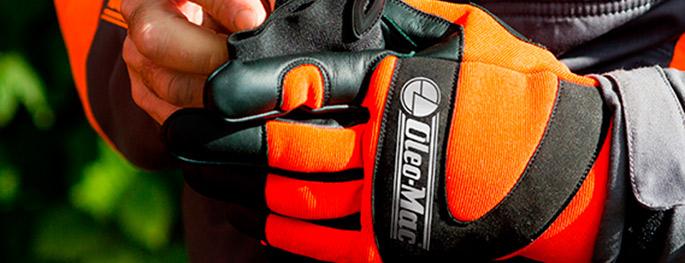
To prune your fig tree, you’ll need some pruning shears, a handsaw, loppers and a telescopic saw (as we’ve seen, fig tree branches aren’t very sturdy, so to cut at height it’s best not to use a ladder but to work from the ground). Wear cut-resistant gloves – at least on the hand not holding the shears or handsaw –safety goggles or a face shield, a helmet where necessary, and long-sleeved work clothes (the milky sap that oozes from the leaves and branches of the fig tree irritates the skin).
If you need to cut thick branches, you can use a chainsaw or a pruner, in which case we recommend wearing cut-resistant clothing, at least trousers, oversleeves and footwear. If you have a battery-powered chainsaw or a battery-powered pruner, you can use a charging station in the countryside to recharge them.


How to prune a fig tree
Before you start pruning, examine your fig tree to decide which branches to leave on the tree. First of all, remove any dead, diseased or damaged branches. Take this opportunity to trim away any stubs left over from previous (incorrect) cuts. Removing damaged parts of the tree is also important for protecting it against diseases, such as botrytis, and attacks by harmful insects.
What’s more, carrying out this initial clean-up simplifies subsequent steps, which must be repeated branch by branch (each of the large branches attached to the fig tree’s trunk):
- Remove suckers and water sprouts: the former are branches that grow at the base of the plant, which are very numerous on the fig tree; the latter are vigorous vertical shoots that grow on the branches. You can also remove the fig tree’s suckers in summer.
- Make reduction cuts starting from the tip and working towards the base of the branch in order to lower the crown, reduce its width and, at the same time, rejuvenate it.
- Cut back any branches that grow inwards towards the centre of the plant or upwards, as well as any excess, poorly positioned or overlapping branches, etc., removing them at the base. To work systematically, always start at the tip and work your way down to the base of the branch.
When making a reduction cut, prune a branch above one of its lateral branches (or a stem above a lateral bud), which then becomes the new tip. In effect, you are redirecting growth onto the lateral branch. With this type of cut, you shorten the branches and encourage the fig tree to produce new ones below the cut, which will bear fruit in the future. So do not shorten the branches by haphazardly trimming off their tips – as you would be removing the parts that produce the figs – but select which ones to leave using reduction cuts.
The fig tree struggles to heal large cuts, such as those on branches with a diameter of 6-10 cm or more: we recommend making as few of these as possible, and only if strictly necessary. When you do need to prune a thick and/or very long branch, to prevent tearing the bark and to maintain maximum control over the cut, do not saw it all at once but do so in several stages, working your way down to the final cut, right up against the branch collar.
In addition, when pruning a fig tree (or any other tree), we recommend that you:
- Make clean cuts, not frayed ones: this is why it is essential that pruning tools are well-sharpened.
- Cut so as to preserve the branch collar, that is, the “ring” connecting the branch to the trunk or to the branch from which it grows: damaging it prevents the fig tree from healing the wound and defending itself against pathogens.
- Do not leave stubs: these act as entry points for insects and diseases.
- Disinfect your tools before moving from one plant to another: a little bleach is enough.
Speaking of fruit trees, here is a selection of related articles from our blog:
- Pruning persimmon trees
- Pruning peach trees
- Pruning vines in the summer
- I Types of grafting
- How to plant an orchard
- How to grow fruit trees on your patio
We’ll conclude with an introduction to tree pruning, a guide to pruning tools and an in-depth look at the mistakes to avoid when pruning.
Related articles

The best pruner for high branches